
About the project
Overworking, activity duplication, and errors in data from systems and documents merely scratch the surface of the problems encountered by payroll specialists.
Each country had its unique process, encompassing roles, tasks, reports, systems, and legal aspects. The primary challenge was to carry out an extensive research on 25 European countries within a four-month timeframe.
I was invited to the project to automate and lead the research process and to combine quantitative and qualitative data into multi-level interactive reports

Daria Kriuchkova
Experience Consultant
Business Analysts




Project Manager

Accountant Managers





Unstructured interview sessions
Lack of time for such a detailed analysis

Absence of overall approach
to gathering and synthesising data
Bottom-up strategy
The extent to which the processes of different countries varied was uncertain. Consequently, I conducted inductive interviews to develop a detailed conceptual framework.
A strong process is crucial for reliable research results. I described the research data path, from data points to reports, in a detailed methodology.
Methodologies aim for people's understanding. I identified prior problems faced by the research team and combined them with the methodology, creating quality gates for the research scope, merging top-down and bottom-up approaches.
Strategies of research data processing
Top-down strategy
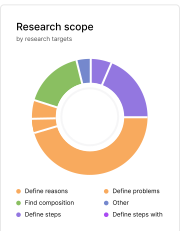
As part of the top-down strategy to convert research data into business value, I documented project goals, research targets, unknown areas, and high-level conceptual framework.
I provided research plan options to stakeholders and we chose the one requiring minimal respondent involvement, focusing on the process's first half without sacrificing research targets.
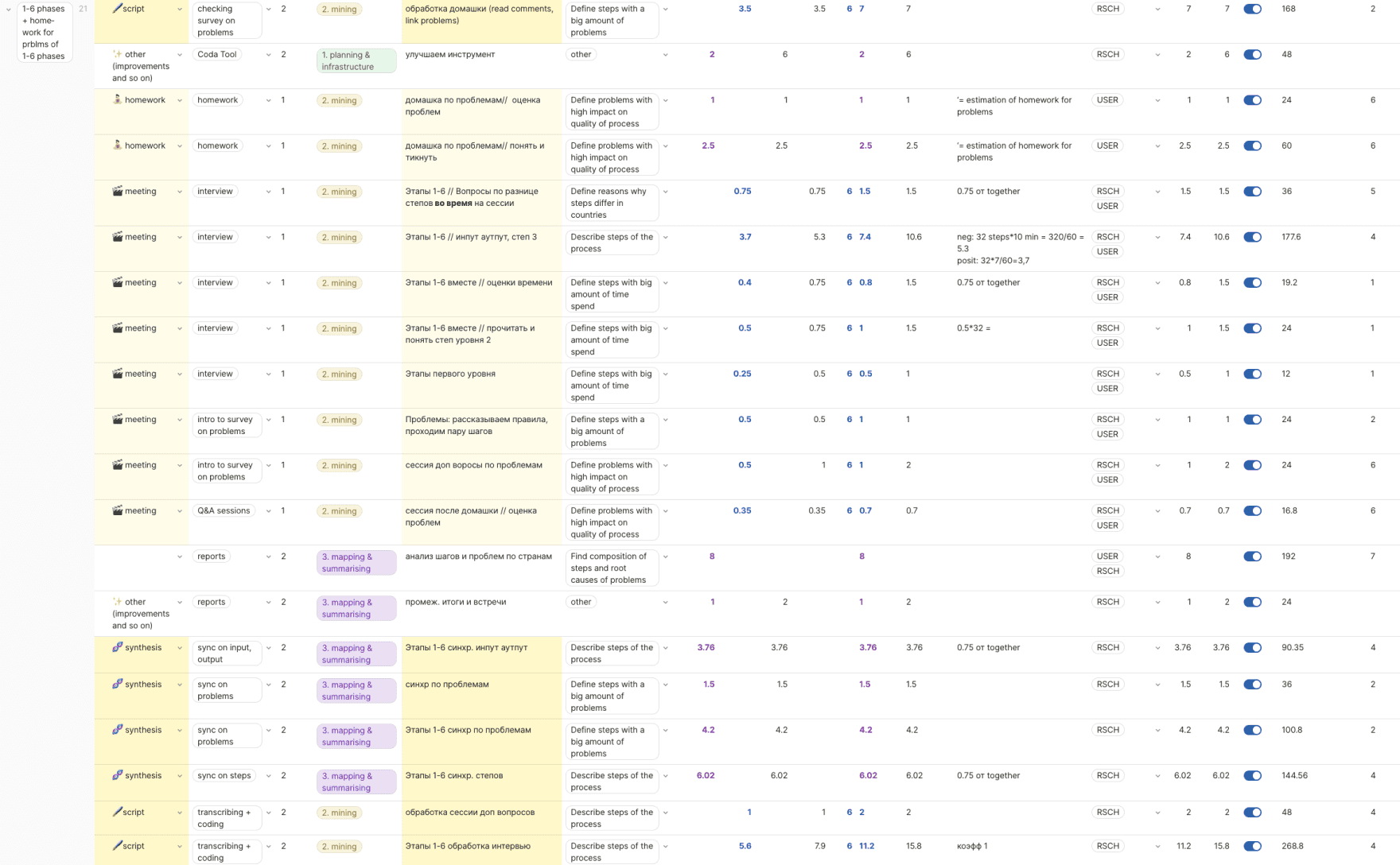
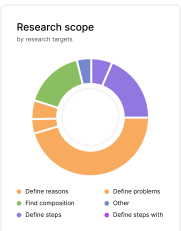
Following the approval of the research plan, I broke it down into a comprehensive research scope.
Estimation of research actions
15
user roles
30
systems
150
interview sessions
3200
analysed datapoints
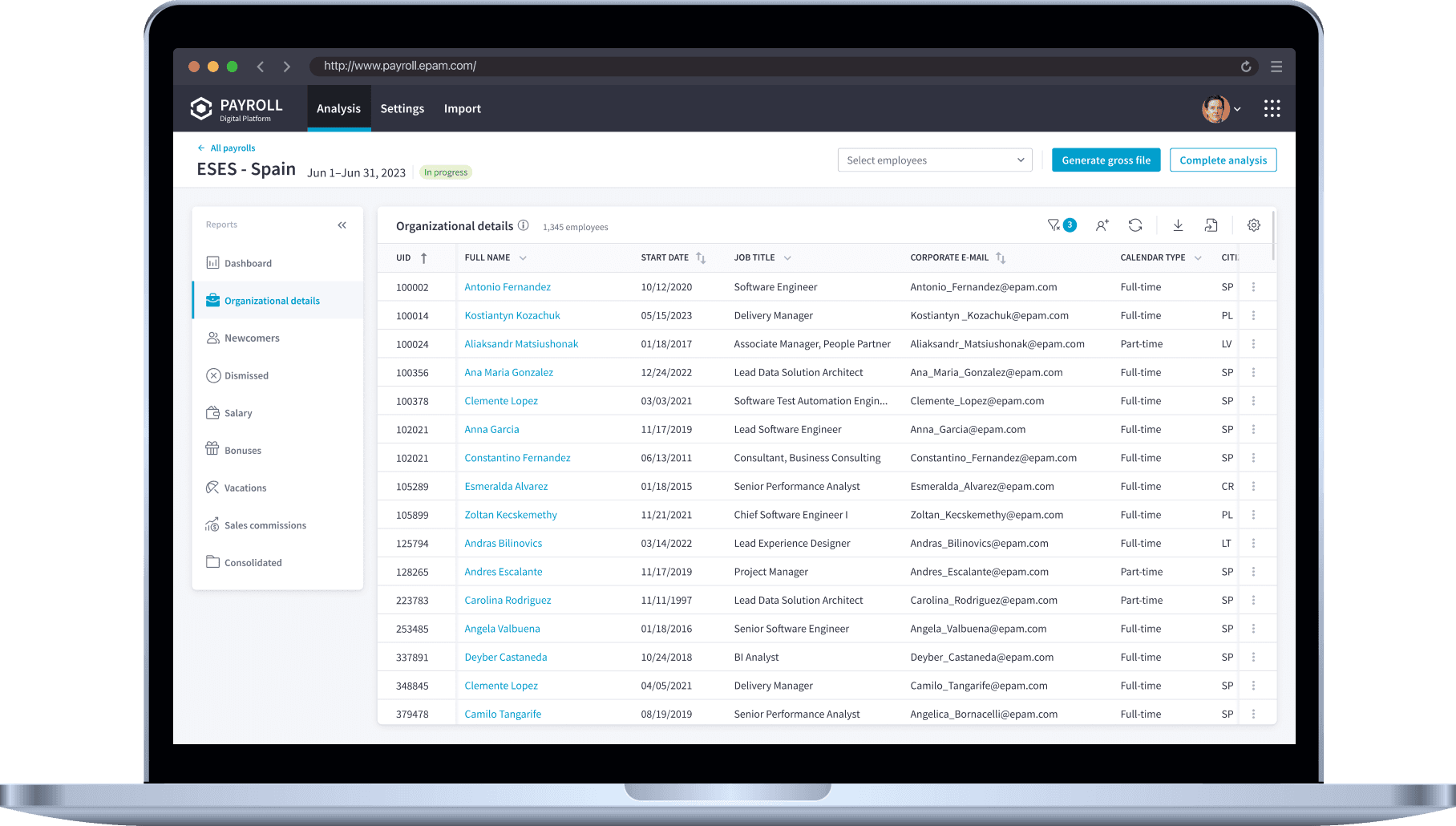
Payroll application
The payroll application is a tool that assists accountants in processing primary financial data. The challenge was that journeys varied across 25 countries. I led the team and automated the research process, enabling us to efficiently handle a substantial dataset within four months.
Untill the mess grows
In qualitative research, codes help to make sense of the data. Effective code directories are crucial. After gathering initial directories from inductive interviews, I knew they would expand and we needed a "cheat-code" for successful research.

Automation of research
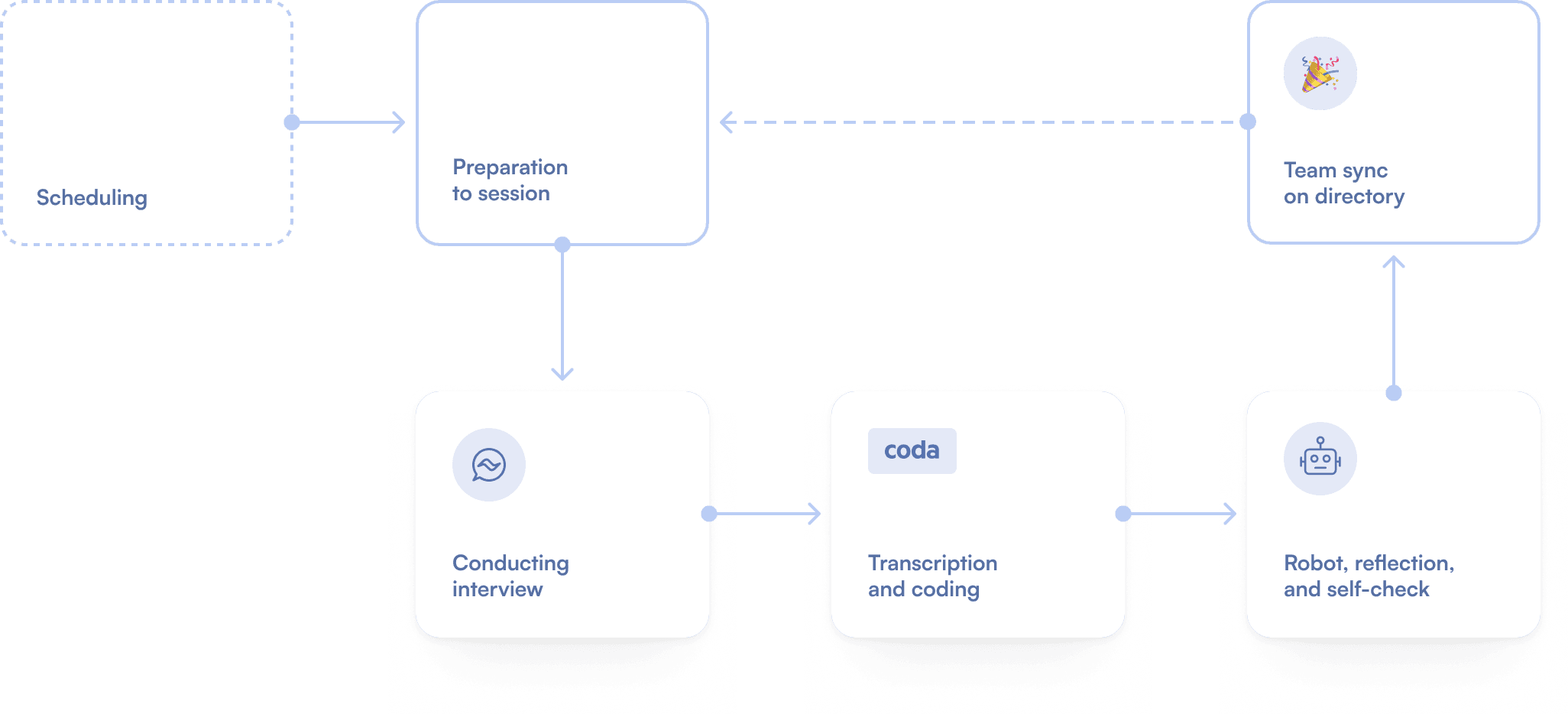
Our research "cheat-code" was an interactive space in Coda. I developed an interactive interview page linked to code directories, allowing synthesis to primarily occur simultaneously with the interview sessions and transcription.
Not everything went smoothly initially: the first interview sessions were intense and stressful. I implemented ongoing process reflection and frequent team sync-ups on code directories, which allowed us to establish a more stable and enjoyable process.
🇨🇿 Czech Republic

Template with interactive questionnaire

Other workflow helpers
Tight deadlines and a powerful flow of information put a lot of pressure on the team. To reduce it I supported researchers with an end-to end workflow helpers: from scheduling tool and workflow interactive guides to reflection sessions and robots helping to maintain code directories.
This is the most comprehensive research I’ve ever seen. Results have exceeded my expectations!

Roman Palchikov
Project Manager
Multiple dimensions for analysis
The high-level reports enabled stakeholders to delve from aggregated views to the initial data with just a few clicks.
The detailed reports facilitated the examination of data from multiple dimensions, identifying areas for process improvement and automation.


Research outcomes
for business
Areas of potential time optimization
with steps that differ a lot from weighted average within the group of countries with similar process
for business
Areas of potential quality improvement
for duplicating steps or historically established actions that no longer have a purpose
for business
Arguments for other departments
for agreeing on optimal split of responsibilities within the process
for IT
All possible types and forms of data
with all the possible types of information being used within the process by various roles
for IT
Base of use cases
for building workflow and statuses in application that will suit all the countries’ optimal processes
for IT
Statistics for decision-making
on the practical usefulness of features

About the project
Overworking, activity duplication, and errors in data from systems and documents merely scratch the surface of the problems encountered by payroll specialists.
The department directors opted to address these issues by developing an entirely new application and implementing comprehensive process optimisation.
Each country had its unique process, encompassing roles, tasks, reports, systems, and legal aspects. The primary challenge was to carry out an extensive research on 25 European countries within a four-month timeframe.
I was invited to the project to automate and lead the research process and to combine quantitative and qualitative data into multi-level interactive reports
Daria Kriuchkova
Experience Consultant
Accountant Managers
Project Manager
Business Analysts
Payroll application
The payroll application is a tool that assists accountants in processing primary financial data. The challenge was that journeys varied across 25 countries. I led the team and automated the research process, enabling us to efficiently handle a substantial dataset within four months.
15
user roles
30
systems
150
interview sessions
3200
processed datapoints
Activities
Project’s goals
Research plan methodology,
estimation, Coda tool
Questionaries deductive exploration
Survey on problems
Interviews inductive exploration
Synthesis team syncs on directories
Reports and conclusions
Strategies of research data processing
Bottom-up strategy
The extent to which the processes of different countries varied was uncertain. Consequently, I conducted inductive interviews to develop a detailed conceptual framework.
A strong process is crucial for reliable research results. I described the research data path, from data points to reports, in a detailed methodology.
Methodologies aim for people's understanding. I identified prior problems faced by the research team and combined them with the methodology, creating quality gates for the research scope, merging top-down and bottom-up approaches.


As part of the top-down strategy to convert research data into business value, I documented project goals, research targets, unknown areas, and high-level conceptual framework.
I provided research plan options to stakeholders and we chose the one requiring minimal respondent involvement, focusing on the process's first half without sacrificing research targets.
Following the approval of the research plan, I broke it down into a comprehensive research scope.
Estimation of research actions


Top-down strategy
Research outcomes
for business
Areas of potential time optimization
with steps that differ a lot from weighted average within the group of countries with similar process
for business
Areas of potential quality improvement
for duplicating steps or historically established actions that no longer have a purpose
for business
Arguments for other departments
for agreeing on optimal split of responsibilities within the process
for IT
All possible types and forms of data
with all the possible types of information being used within the process by various roles
for IT
Base of use cases
for building workflow and statuses in application that will suit all the countries’ optimal processes
for IT
Statistics for decision-making
on the practical usefulness of features
Multiple dimensions for analysis
The high-level reports enabled stakeholders to delve from aggregated views to the initial data with just a few clicks.
The detailed reports facilitated the examination of data from multiple dimensions, identifying areas for process improvement and automation.
This is the most comprehensive research I’ve ever seen. Results have exceeded my expectations!
Roman Palchikov
Project Manager

Other workflow helpers
Tight deadlines and a powerful flow of information put a lot of pressure on the team. To reduce it I supported researchers with an end-to end workflow helpers: from scheduling tool and workflow interactive guides to reflection sessions and robots helping to maintain code directories.
Automation of research
Our research "cheat-code" was an interactive space in Coda. I developed an interactive interview page linked to code directories, allowing synthesis to primarily occur simultaneously with the interview sessions and transcription.
Not everything went smoothly initially: the first interview sessions were intense and stressful. I implemented ongoing process reflection and frequent team sync-ups on code directories, which allowed us to establish a more stable and enjoyable process.

Untill the mess grows
In qualitative research, codes help to make sense of the data. Effective code directories are crucial. After gathering initial directories from inductive interviews, I knew they would expand and we needed a "cheat-code" for successful research.
Untill the mess grows
In qualitative research, codes help to make sense of the data. Effective code directories are crucial. After gathering initial directories from inductive interviews, I knew they would expand and we needed a "cheat-code" for successful research.
Automation of research
Our research "cheat-code" was an interactive space in Coda. I developed an interactive interview page linked to code directories, allowing synthesis to primarily occur simultaneously with the interview sessions and transcription.
Not everything went smoothly initially: the first interview sessions were intense and stressful. I implemented ongoing process reflection and frequent team sync-ups on code directories, which allowed us to establish a more stable and enjoyable process.

Other workflow helpers
Tight deadlines and a powerful flow of information put a lot of pressure on the team. To reduce it I supported researchers with an end-to end workflow helpers: from scheduling tool and workflow interactive guides to reflection sessions and robots helping to maintain code directories.
Multi-view reports
The high-level reports enabled stakeholders to delve from aggregated views to the initial data with just a few clicks.
The detailed reports facilitated the examination of data from multiple dimensions, identifying areas for process improvement and automation.
This is the most comprehensive research I’ve ever seen. Results have exceeded my expectations!
Roman Palchikov
Project Manager

High-level report

Detailed report
Research outcomes
for business
Areas of potential time optimization
with steps that differ a lot from weighted average within the group of countries with similar process
for business
Areas of potential quality improvement
for duplicating steps or historically established actions that no longer have a purpose
for business
Arguments for other departments
for agreeing on optimal split of responsibilities within the process
for IT
All possible types and forms of data
with all the possible types of information being used within the process by various roles
for IT
Base of use cases
for building workflow and statuses in application that will suit all the countries’ optimal processes
for IT
Statistics for decision-making
on the practical usefulness of features
About the project
Overworking, activity duplication, and errors in data from systems and documents merely scratch the surface of the problems encountered by payroll specialists.
The department directors opted to address these issues by developing an entirely new application and implementing comprehensive process optimisation.
Each country had its unique process, encompassing roles, tasks, reports, systems, and legal aspects. The primary challenge was to carry out an extensive research on 25 European countries within a four-month timeframe.
I was invited to the project to automate and lead the research process and to combine quantitative and qualitative data into multi-level interactive reports
Daria Kriuchkova
Experience Consultant
Business Analysts
Project Manager
Accountant Managers
4 months
Strategies of research data processing
Top-down strategy
As part of the top-down strategy to convert research data into business value, I documented project goals, research targets, unknown areas, and high-level conceptual framework.
I provided research plan options to stakeholders and we chose the one requiring minimal respondent involvement, focusing on the process's first half without sacrificing research targets.
Following the approval of the research plan, I broke it down into a comprehensive research scope.
Estimation of research actions
Unstructured interview sessions
Lack of time for such a detailed analysis
Absence of overall approach
to gathering and synthesising data
Bottom-up strategy
The extent to which the processes of different countries varied was uncertain. Consequently, I conducted inductive interviews to develop a detailed conceptual framework.
A strong process is crucial for reliable research results. I described the research data path, from data points to reports, in a detailed methodology.
Methodologies aim for people's understanding. I identified prior problems faced by the research team and combined them with the methodology, creating quality gates for the research scope, merging top-down and bottom-up approaches.
Payroll application
The payroll application is a tool that assists accountants in processing primary financial data. The challenge was that journeys varied across 25 countries. I led the team and automated the research process, enabling us to efficiently handle a substantial dataset within four months.
15
user roles
30
systems
150
interview sessions
3200
analysed datapoints
Other cases
Order-to-Cash Ecosystem
As the order-to-cash process failed to scale with company growth, I built a data-driven, cross-product CJM spanning multiple apps, monetized each step, and identified 100+ actionable opportunities to reduce costs.

Survey questions
260
Quantified problems
420
Expenses App Strategy Shift
I led a research team that produced CJMs and personas, informing a new concept, and then coordinated focus groups and a quantitative survey to validate it, driving adoption and saving time and resources versus the original approach.

Team size
4
Months saved
4
Order-to-Cash Ecosystem
As the order-to-cash process failed to scale with company growth, I built a data-driven, cross-product CJM spanning multiple apps, monetized each step, and identified 100+ actionable opportunities to reduce costs.
Questions
260
Problems
420
Expenses App Strategy Shift
I led a research team that produced CJMs and personas, informing a new concept, and then coordinated focus groups and a quantitative survey to validate it, driving adoption and saving time and resources versus the original approach.
Team size
4
Months saved
4
Order-to-Cash Ecosystem
As the order-to-cash process failed to scale with company growth, I built a data-driven, cross-product CJM spanning multiple apps, monetized each step, and identified 100+ actionable opportunities to reduce costs.
Survey questions
260
Quantified problems
420
Expenses App Strategy Shift
I led a research team that produced CJMs and personas, informing a new concept, and then coordinated focus groups and a quantitative survey to validate it, driving adoption and saving time and resources versus the original approach.
Lead team size
4
Months saved
4